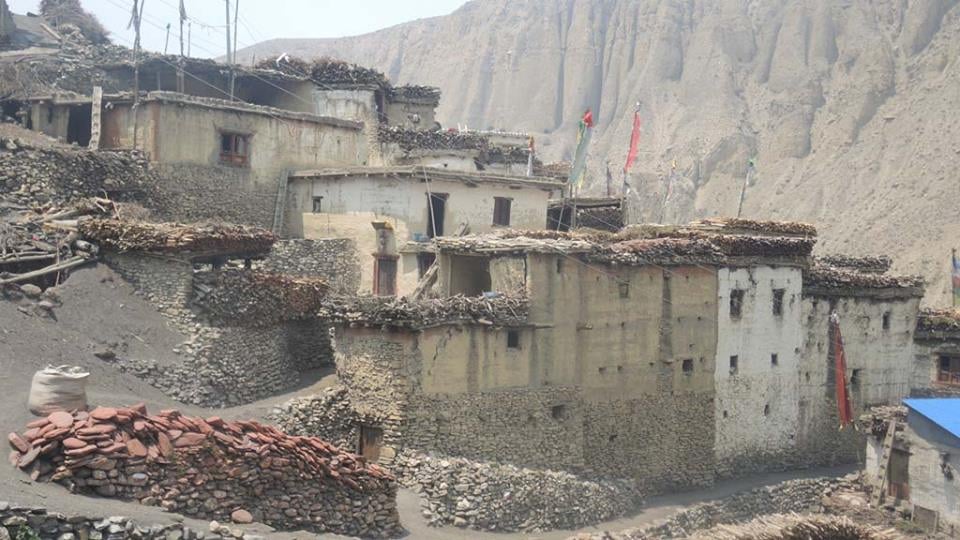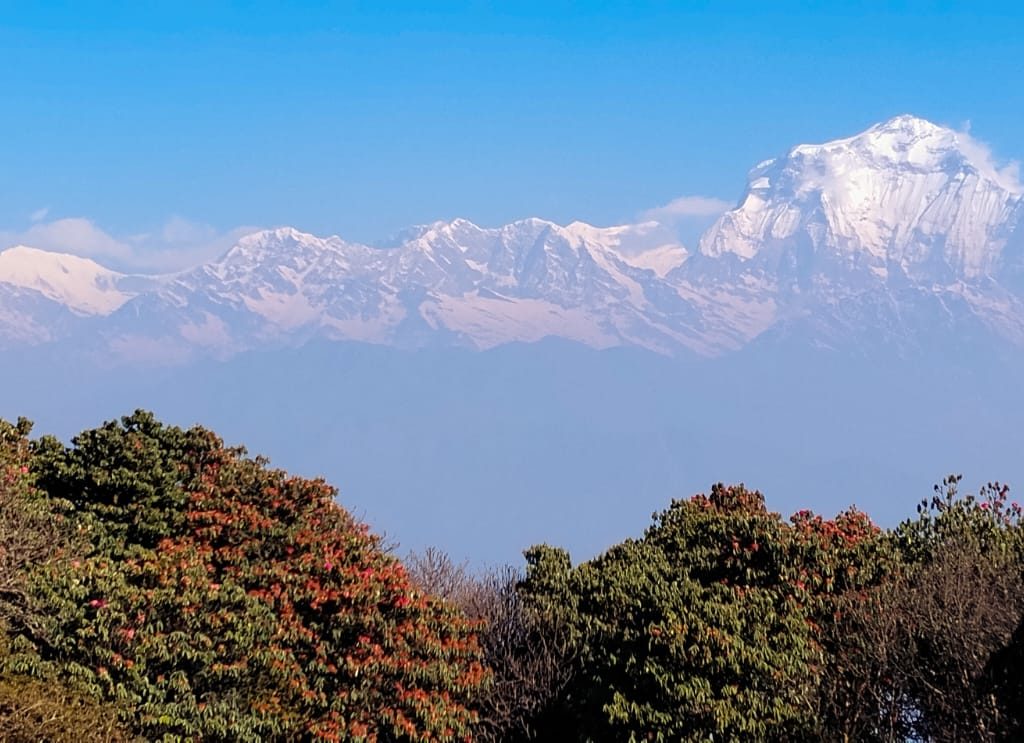
Ghorepani village, 2800m, generally called Poonhill 3210m, is the most popular short trekking destination in Nepal. It lies in the Annapurna Region of Gandaki Province, Nepal, which is popular for its scenic mountain views such as the Annapurna Ranges, Nilgiri, Dhaulagiri, Gurja Himal, Annapurna South, Himchuli, Dhampus Peak, and Dhampus Pass. This place offers a stunning sunrise view at the top of the Annapurna and Dhaulagiri ranges.
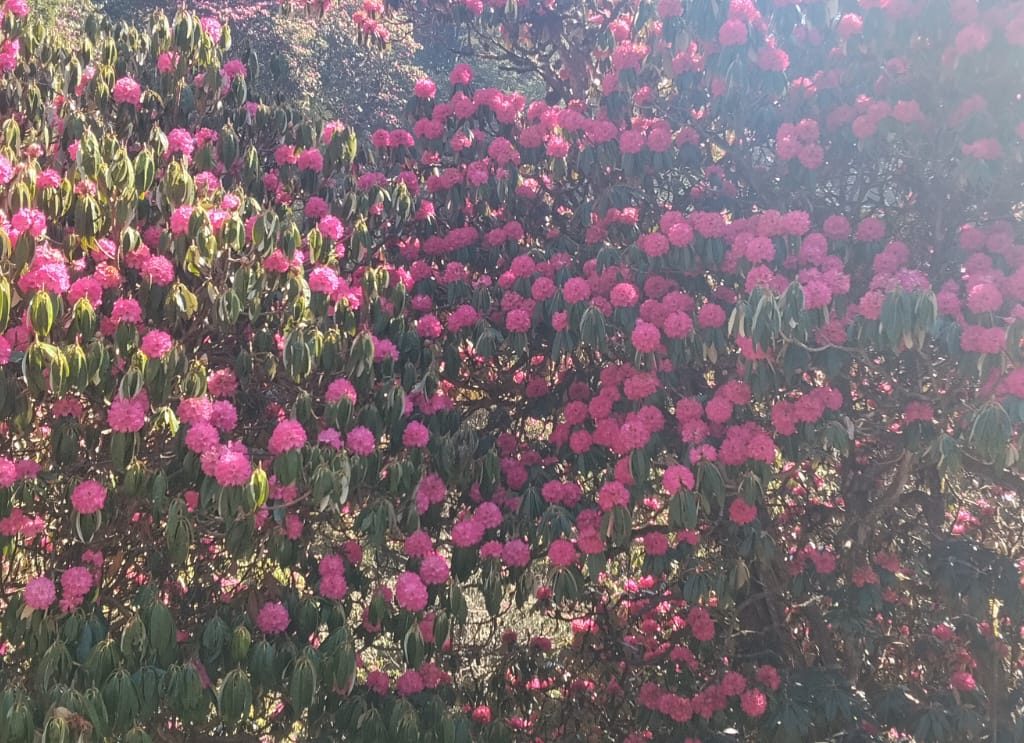
This area is surrounded by thick rhododendron, juniper, and Magnolia forest, and it is well-protected for the different kind of rhododendron flowers which blooms during the spring season. Several Gurung and Magar villages lie on the trekking path of the Ghorepani Trek, and generally this trek ends at the popular Gurung Village of Ghandruk at 1900m.
Generally, Ghorepani Treks start from Pokhara and end in Pokhara. This trek can be completed in two, three, or five days, depending on physical fitness. This trek is considered an easy trek suitable for beginners. The trekking path does not climb to a high altitude, but has steep terrain with several steep stone stairs to climb up to Ulleri village, on the way to Deurali village, steep stairs and down to Tadapani village and an easy downward trekking route till Ghorepani village. From Ghandruk village, one can take a jeep or bus ride to return to Pokhara.
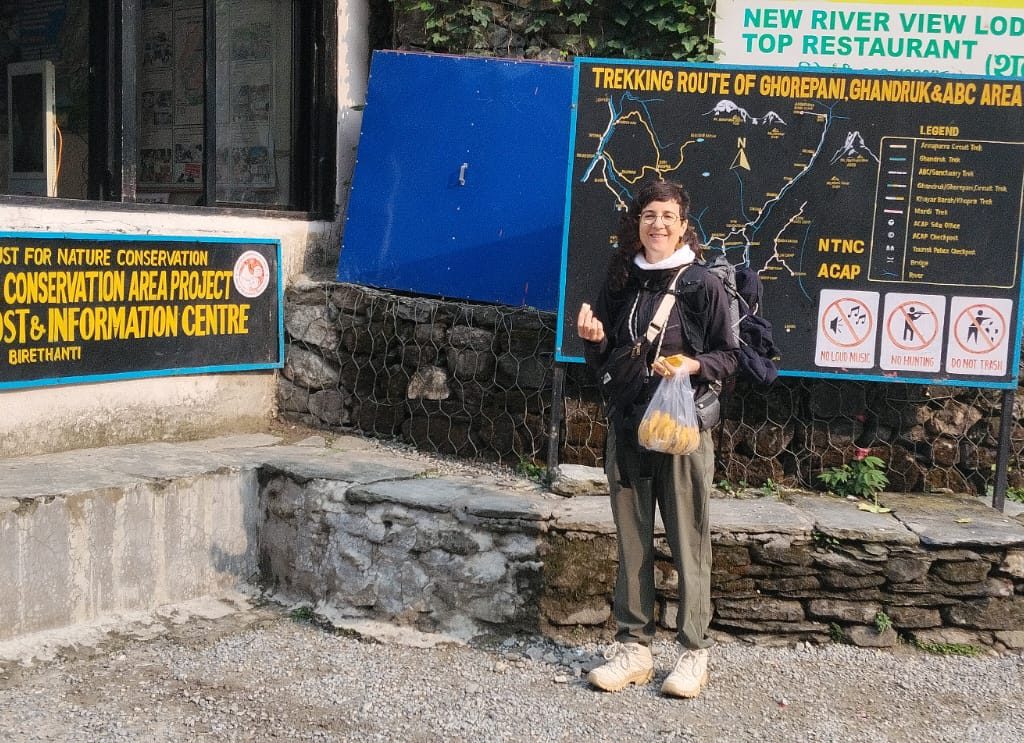
How to do the rapid Poonhill trek in three days, avoiding the transport and the number of tourists?
On 20th April 2026, Julia from Canada, who came to Nepal for the first time, started this trek from Kathmandu by bus on the first day. It was a 200 km journey that took about 7 hours to reach Pokhara, a beautiful lake city, to begin several treks. On the second day, a taxi took them to the Birethanti check post on the bank of the Modi Khola, where tourists could enter the Annapurna region. It takes 1 hour to cover the distance of 42 kilometres. According to Julia, “our initial planning was to take a local jeep ride up to Banthanti village, but it was too early to get a shared jeep, so we continued walking towards the Ulleri Village, walking through the beautiful village of Sudame, Hile, and Tikhedhunga for one hour and forty-five minutes” It was early in the morning, and there were fewer crowds and less traffic.
The air was breezy, and we met several locals with whom we exchanged “Namaste”. Though my guide Subhadien walked at a slightly fast pace because he was afraid of not getting any kind of transport on the way. However, before entering Tikhedhunga village, there were several reserved jeep passed infront of us. It was just beginning, and it was followed by several others; however, they were full of Nepalese people. Finally, a jeep stopped in front of us, and the driver agreed to take both of us to Banthanthi village. As Jouly wanted to walk the entire trek changed her idea and enjoyed a jeep ride with a local family who were from Ulleri, left their place and went to Hong Kong and back with their children to enjoy their trip to Poonhill. The terrain was rough with a lot of climbing, but once we engaged with their memories and today’s comparison, we did not feel the path was so long. We stopped in Banthanti village, and the Gurung family continued in the jeep to go to Ghorepani village.
Lunch at Banthanti village and hike to Ghorepani village:
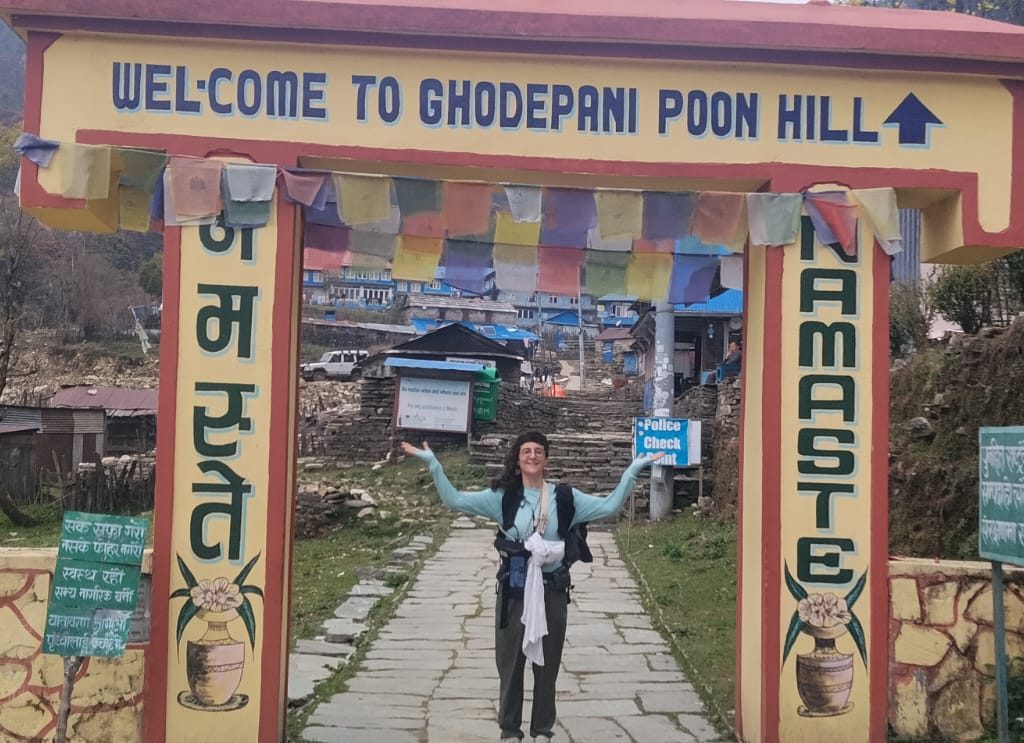
We took a little break for our lunch at the restaurant in Banthanti village. The village restaurant is surrounded by lush green forest, and the dal bhat was already prepared. Both of us ate the same thing, a veg dal bhat(Rice, Lentil soup, vegetables and pickles with fresh lemon water. It was a wonderful meal before commencing our hike. After 45 minutes of Lunch break, we finally push ourselves to Ghorepani village, walking along the bank of the river and the ancient path. Moreover, the ancient path was ruined in several places by the bulldozer to make a big road. For my guide, it was the end of the trekking route with far more benefits to the villagers who reside in the region. He shared the experience of the trekking days of the Annapurna Circuit was diminished by the road. It took us two and a half hours to reach Nangethanti at 2530m, another lunch place before Ghorepani. From this place onwards, we found a lot of rhododendron trees blooming with red and pink flowers, and the white flowers of the Magnolia trees. We took a rest and drank water in this place for a while, and continued our hike to Ghorepani village and reached the check post for the permit check. From this place, there are several stone steps leading to Ghorepani village. We arrived in the village and took the already reserved guest house to take a rest.
Distance covered from Birethanti to Tikhedhunga village: 2 hours- 7 Kilometers
Tikhedhunga to Banthanti Village by shared jeep, taking a road- 1 hour
Banthanti to Ghorepani: 3 hours 15 minutes
Reaching Ghorepani at 3 p.m my guide was relaxed as we arrived in a goodtime. The weather was a bit foggy without mountain views. Both of us took a good rest, an early dinner and early to bed to rise early to climb Poonhill. We are exhausted, but both of us completed the day.
Day 2: Early Rise and climb the stairs to Ghorepani viewpoint:
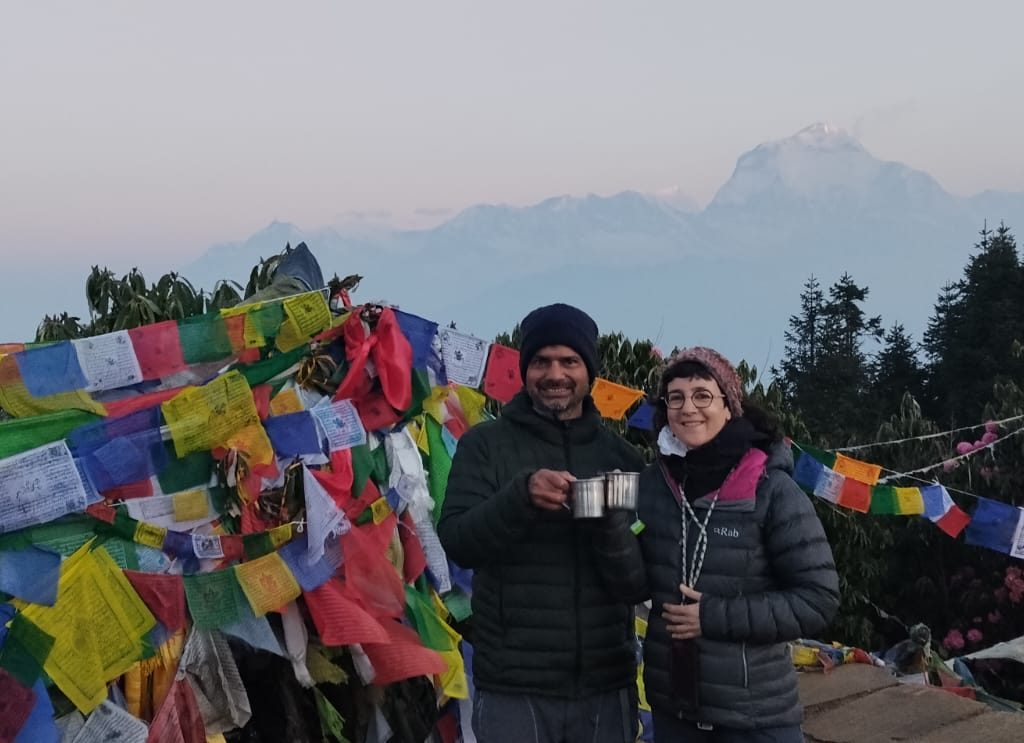
The night was quiet, and from the exhaustion, an early rise was a good idea. At 4.45 am, we started our walk to the viewpoint, walking up the stairs. There were a lot of other Nepalese and foreign nationals walking and taking rest on the stairs. The early morning light started around 5.15 am, but we had not arrived at the top. On the northeast corner, we saw the first glimpse of the Annapurna, and on the southeast, the massive Dhaulagiri appears. It was such a mesmerising view, and we rushed towards the viewpoint. The first ray of the sun appears on the top of the Dhaulagiri around 6.15 am, and then it slowly rises above the top of the Annapurna ranges. It was a mind-blowing image that remained inside me forever. From Dhaulagiri I, II, III, IV, Gurja Himal, Nilgiri Himal, Annapurna South, Dhampus Himal, Himchuli, Fishtail, Annapurna I, Fishtail, Annapurna IV and Annapurna II. Plus, the rhodendron flowers bloomed in different colours, what a good combination, a view with a cup of coffee/tea. After taking several pictures and videos and watching the most wonderful magic of Mother Nature, we descended from Poonhill, took our lunch at 6.45, and started our trek at 7:15. Our destination was Ghandruk for today.
On the way to Ghandruk:
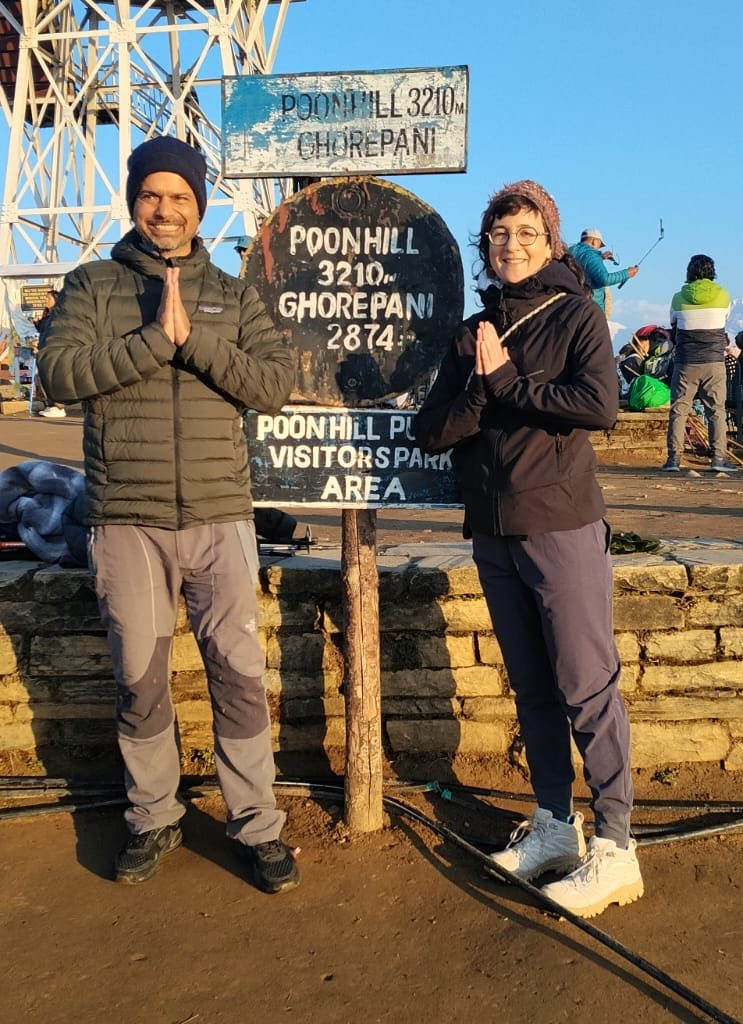
On that day, to go to Ghandruk, we again had to climb stairs for another viewpoint, Gurunghill, having a wonderful view of a forest blooming with a lot of rhododendron. We were the first hikers who left poonhill that day, and it was charismatic. Each step and each mountain we saw we captured was mind-blowing. The reflection of the sun over the mountains and the colourful hills with the rhododendron forest and the richness of Mother Nature, I had a great feeling of admiration towards our planet. It takes more than three hours to reach Deurali, where we had our first tea break for 30 minutes, and descend the stairs leading to Tadapni. On Tadapani, we had lunch around 12.30 p.m, and by one p.m., we were walking towards Ghandruk Village.
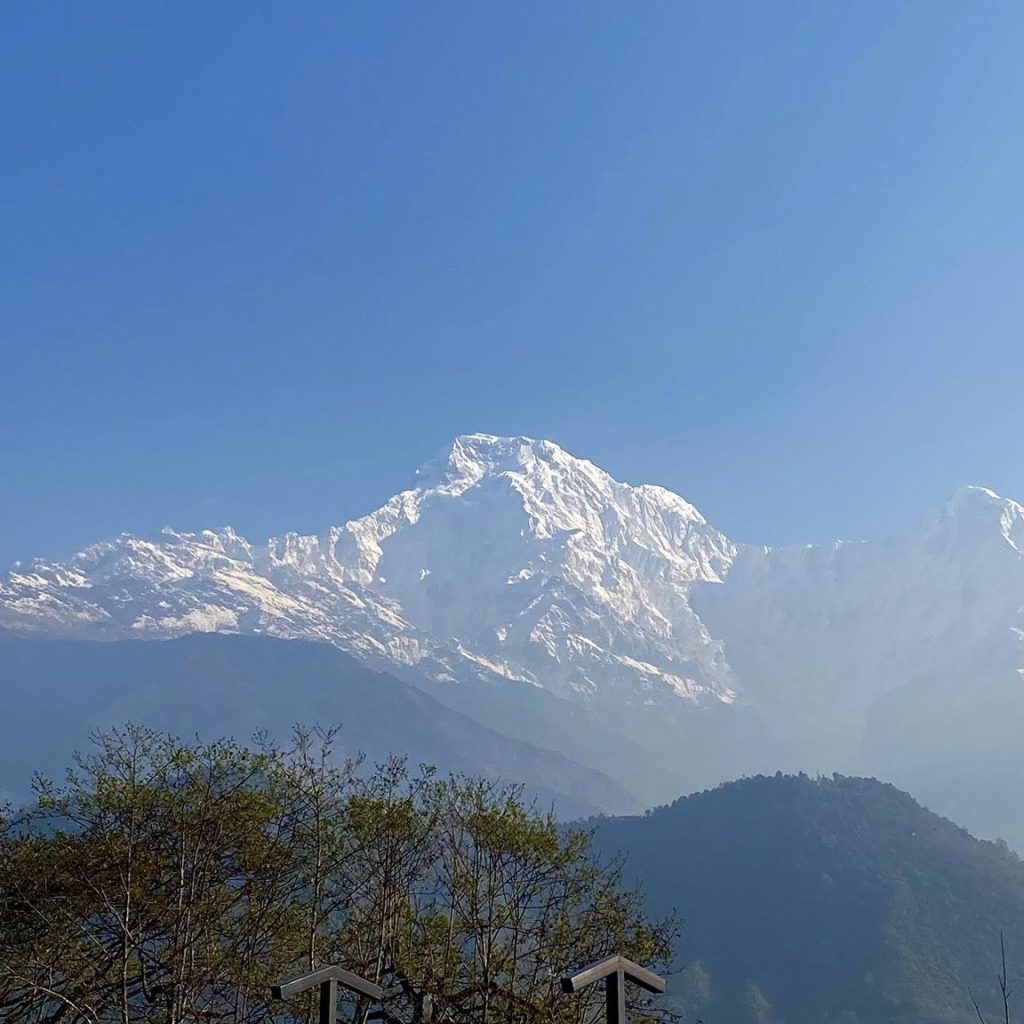
Walking towards Ghandruk, Joulie exchanged fewer German words with her guide as she shared about her interest in dance and her past life. It was great fun that she used the German Language after 30 years, and it was difficult for both of them to remember the words learned in their school. After two hours of walk we were finally at Ghorepani village. The lodge was not reserved in advance, so the first lodge denied us as they don’t have space. A bit of frustration arose from the fatigue; however, the Mountain View Lodge offers us a space with a good view. It was a long walk beginning from 4.45 am and finishing at 3.30 p.m. We are tired, happy, and we want to take a rest. After a good shower and dinner, the night started early to prepare the body for the next day, to the Kande/Australian camp.
Distance travelled and hours: 45 minutes of morning hike, 16 kilometres, 7 hours
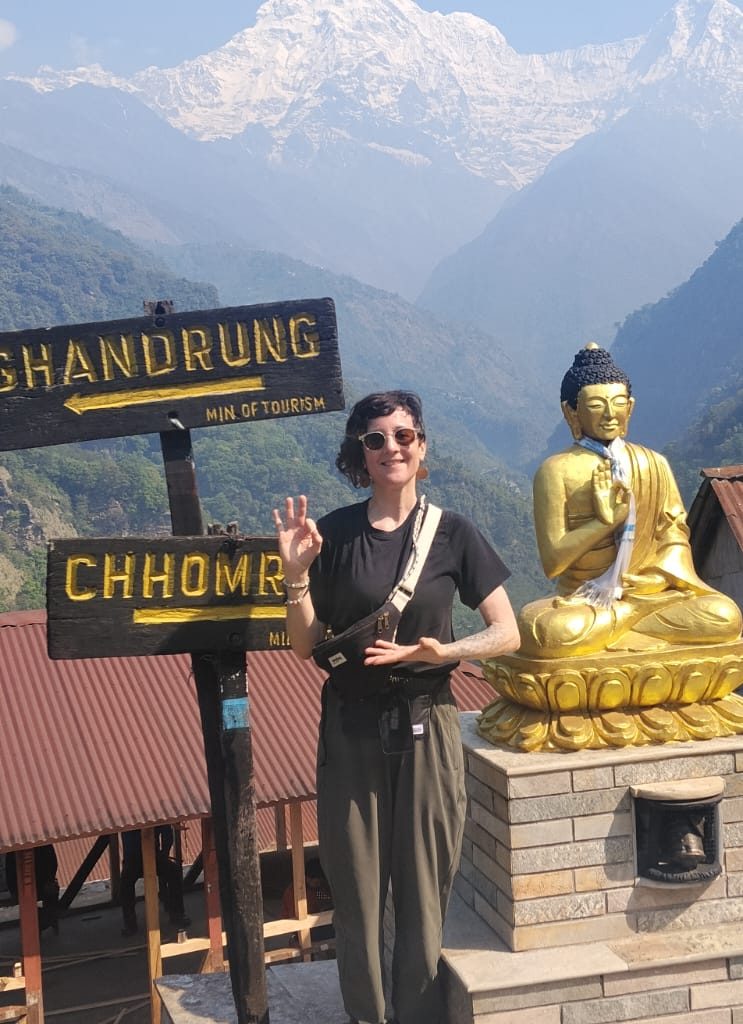
Day 3: Ghorepani to Kande/ Taxi to Pokhara: To avoid the volume of tourists and traffic, we made a decision to finish the third day trek in Pokhara, walking towards Landruk Village. From the traditional route of the Ghandruk village, we descend downwards towards Modi Khola, passing through an ancient staircase through a few abandoned houses, a cattle shed, and bird chirping noises. It was a long path to Modi Khola, which took about 45 minutes. After a long descending walk, it is again time to walk uphill on stairs. How could the villagers go up and down with their production when the village was full? An important question arises in my mind. However, there was no option except walking with a wonderful view of Annapurna South and Himchuli. It was such a fantastic moment, tired and excited. We reached the top of the Landruk village, a wonderful Gurung community village with stone houses and paddy fields. There is a jeep route between Landruk and Pokhara used less than the Ghandruk village. So, instead of taking the main road, we take the main road to move towards Tolka village. As there was not much traffic, our movement was fast. To avoid the shortcut uphill trekking trail to Deurali, we take the main road to reach Pothana by passing Deurali village.
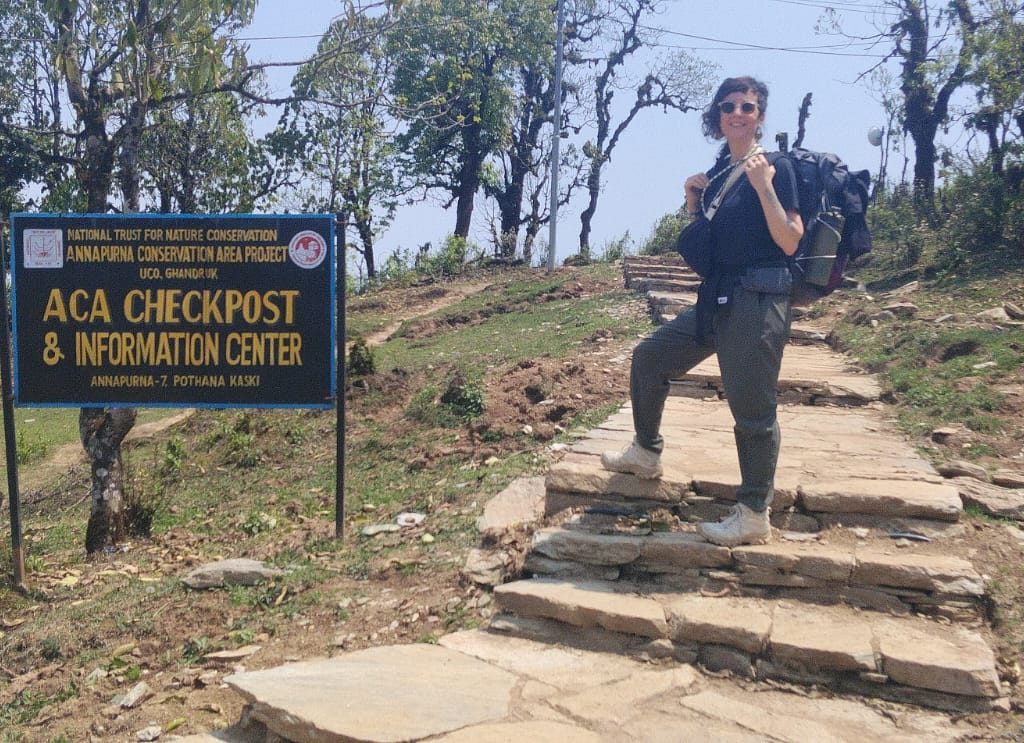
We took a lunch break at Pothana village near the ACAP checkpoint, a good fried rice and a cup of lemon tea, what a combination. After 30 minutes lunch break, we headed towards the Australian camp. Without stopping there, the path took us to Kande village, walking for more than 1 hour. In total, it took 6.30 hours to complete this trek with a few breaks. The day was rewarding, less crowded and no vehicles, plus meeting with local people and exchanging a few words with them was a wonderful experience.
Summary: As for me, it was a wonderful experience to complete this trek at a fast pace, enjoying the view of the village, mountains, and local people. However, it is always best to complete this trek at your own pace, enjoying each moment. Overall, it is a rewarding trek with an extraordinary experience.