
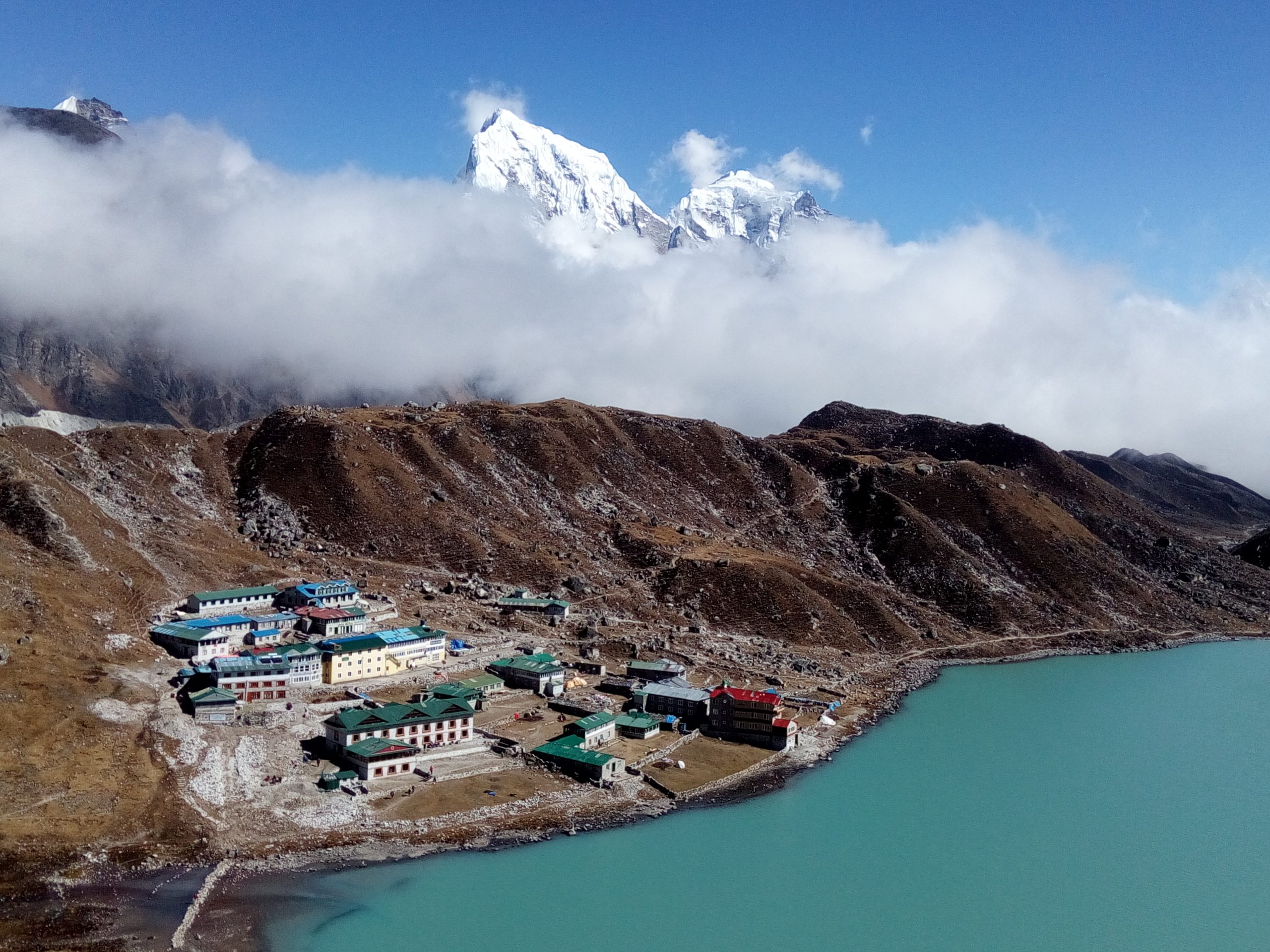
When you stand at the edge of the fourth Gokyo Lake and watch its impossible turquoise waters reflect Cho Oyu’s massive ice walls, you understand why many trekkers call this route even more beautiful than Everest Base Camp. The Gokyo Lakes Trek takes you into a pristine corner of the Khumbu region where fewer footsteps have worn the trail, yet the rewards rival any Himalayan journey.
Six sacred lakes scattered across a high-altitude valley, the world’s longest glacier winding through mountains, and views from Gokyo Ri that encompass four of Earth’s fourteen 8,000-meter peaks. This trek combines the spiritual atmosphere of Sherpa culture with raw, untouched alpine beauty that feels like discovering a secret the Himalayas have been keeping.
What Makes Gokyo Lakes Trek Challenging?
The Gokyo Lakes Trek earns its “challenging” rating through several factors beyond simple fitness requirements.
Altitude is the Primary Challenge
At 5,357 meters, Gokyo Ri reaches heights where altitude sickness affects everyone differently. Physical fitness doesn’t prevent altitude illness. We’ve guided marathon runners who struggled while moderate exercisers thrived. The key is proper acclimatization, which our itinerary provides through gradual ascent and rest days.
Cumulative Physical Demand
Daily trekking for 12 days, even with rest days, accumulates fatigue. Your legs will feel the 5-7 hours of daily walking, often on steep, uneven stone steps. Cardiovascular endurance matters more than muscular strength.
Weather Variables
High-altitude weather changes rapidly. Morning sunshine can become afternoon snow. Temperatures at Gokyo drop well below freezing at night, even during optimal trekking seasons. Wind on Gokyo Ri can be punishing.
Basic Accommodation
Teahouses offer shelter and meals but minimal comfort. Expect thin mattresses, shared bathrooms (often squat toilets), no heating except the dining room stove, and communal spaces where privacy is limited.
Mental Fortitude
The hardest part often isn’t physical. Long days on the trail, nights in cold lodges, missing home comforts, and pushing through fatigue when Gokyo Ri’s summit seems impossibly far all test mental resilience.
Highlights
- Fewer Crowds, More Solitude
- Superior Mountain Views: Everest, Lhotse, Makalu, and Cho Oyu simultaneously
- The Sacred Lakes: Six glacial lakes, largest lake, Thonak Tsho, over a kilometer long
- Less Altitude Stress: Gokyo village sits at 4,790 meters
Highlights: Welcome to Nepal, trek briefing, equipment check
Accommodation: 3-star hotel in Thamel
Meals: Welcome dinner
Your adventure begins the moment you step into Kathmandu's chaotic, colorful embrace. Our representative meets you at Tribhuvan International Airport, navigating you through the visa process if you haven't arranged it beforehand. After settling into your hotel in Thamel, the tourist heart of Kathmandu, we gather for a welcome dinner featuring traditional Nepali cuisine. Your guide explains the journey ahead, checks your gear, and answers any last-minute questions. Tonight, sleep well. Tomorrow brings the famous Lukla flight.
Flight Time: 35 minutes
Trekking Time: 3-4 hours
Trekking Distance: 8km
Altitude Change: -250m
Accommodation: Teahouse
Meals: Breakfast, lunch, dinner
The Lukla flight ranks among the world's most dramatic. Your twin-engine plane navigates between mountain ridges, landing on a runway that seems impossibly short, carved into a mountainside with a sheer drop at one end. Adrenaline pumping, you've officially entered the Khumbu. After meeting your porter and organizing packs, the trek begins with a gentle descent toward Phakding. You cross suspension bridges decorated with prayer flags, pass mani walls carved with Buddhist mantras, and get your first taste of Sherpa hospitality at your teahouse. The Dudh Koshi River roars beside the trail, fed by glacial melt from mountains you'll soon stand beneath.
Trekking Time: 5-6 hours
Trekking Distance: 11km
Altitude Gain: +830m
Accommodation: Teahouse
Meals: Breakfast, lunch, dinner
Today brings your first real altitude gain. The trail follows the Dudh Koshi valley through pine forests, crossing the river multiple times on high suspension bridges that sway gently with your steps. After entering Sagarmatha National Park at Monjo (permit checkpoint), the trail steepens dramatically. The final climb to Namche Bazaar tests legs and lungs, over 600 meters of continuous uphill on stone steps. Just when exhaustion threatens, you round a bend and catch your first glimpse of Everest, Lhotse, and Ama Dablam towering impossibly high. Namche appears ahead, an amphitheater of buildings clinging to a mountainside. This bustling Sherpa capital offers bakeries, gear shops, and the comfort of knowing tomorrow is a rest day.
Activities: Hike to Everest View Hotel or Khumjung village
Hiking Time: 3-4 hours
Altitude: Up to 3,880m, return to 3,440m
Accommodation: Teahouse
Meals: Breakfast, lunch, dinner
Acclimatization saves lives and ensures trek success. Today follows the golden rule: climb high, sleep low. Most trekkers hike to the Everest View Hotel (3,880m), where panoramic windows frame Everest, Ama Dablam, and surrounding peaks while you sip coffee at the world's highest luxury hotel. The alternative visits Khumjung village, home to a monastery that allegedly houses a yeti scalp. Whichever route you choose, you return to Namche for the night, allowing your body to adapt to altitude while exploring Sherpa culture. Visit the weekly market (if Saturday), tour the Sherpa Culture Museum, or simply enjoy Namche's surprisingly cosmopolitan bakeries and restaurants.
Trekking Time: 5-6 hours
Trekking Distance: 10km
Altitude Gain: +670m
Accommodation: Teahouse
Meals: Breakfast, lunch, dinner
Leaving Namche, you diverge from the Everest Base Camp trail, heading west toward Gokyo. The path climbs through rhododendron and juniper forests, offering glimpses of Thamserku and Kantega peaks. After crossing the Dudh Koshi again at Phortse Tenga, the trail ascends steeply to Dole. The air grows noticeably thinner. Trees become scarce, replaced by alpine scrub. Your teahouse tonight sits in a small cluster of lodges, intimate and quiet compared to Namche's bustle. The temperature drops significantly at this elevation. Bundle up for dinner, where you'll share the dining room's warmth with other trekkers attempting Gokyo or the Three Passes.
Trekking Time: 4-5 hours
Trekking Distance: 5km
Altitude Gain: +360m
Accommodation: Teahouse
Meals: Breakfast, lunch, dinner
A shorter day allows continued acclimatization while making steady progress. The trail continues ascending gradually through Lhabarma and Luza villages, small settlements with just a few lodges each. Prayer flags flutter constantly in the high-altitude wind. You're now walking alongside the Ngozumpa Glacier, though it's hidden beneath rock debris. Machhermo, your destination, achieved unfortunate fame in 1974 when a yeti allegedly attacked a Sherpa woman here. The village maintains a small memorial to the incident, drawing curious trekkers. More importantly, Machhermo offers comfortable lodges and crucial acclimatization before reaching the lakes. Altitude symptoms like mild headache or reduced appetite are normal. Drink plenty of water and inform your guide of any concerns.
Trekking Time: 4-5 hours
Trekking Distance: 7km
Altitude Gain: +320m
Accommodation: Teahouse
Meals: Breakfast, lunch, dinner
Today brings the moment you've been anticipating. The trail follows the valley gradually upward, and suddenly the first Gokyo Lake (Longponga) appears, its waters an unnatural turquoise that seems photoshopped even as you stand before it. The second lake (Taboche Tsho) follows shortly, even larger and more stunning. As you round a rocky ridge, the main lake spreads before you with Gokyo village perched on its shore and Cho Oyu (8,188m) dominating the skyline. The village consists of perhaps 15 lodges, a small monastery, and the profound silence of high altitude. After checking into your teahouse, walk to the lake's edge. The water's impossible color comes from glacial flour, rock ground to powder by glaciers and suspended in meltwater. Tomorrow you'll climb Gokyo Ri, so rest well tonight. The altitude here affects everyone. Move slowly, drink constantly, and report any severe symptoms to your guide immediately.
Climbing Time: 3-4 hours round trip
Altitude Gain: +567m
Accommodation: Teahouse in Gokyo
Meals: Breakfast, lunch, dinner
The alarm sounds while stars still fill the sky, around 4:30 AM. You dress in every warm layer you brought and begin the climb in darkness, headlamps bobbing up the rocky trail. Gokyo Ri's ascent feels endless. The air holds perhaps 50% of the oxygen you're accustomed to at sea level. Every step requires deliberate effort. Climbers spread out along the trail, each moving at their own sustainable pace. But as the eastern sky begins to glow, you push through exhaustion, driven by the promise of what awaits above.
The summit prayer flags appear. You scramble the final meters and turn to face the Himalayas at dawn. Four eight-thousanders stand before you: Everest (8,849m) with its distinctive pyramid, Lhotse (8,516m) immediately beside it, Makalu (8,485m) to the east, and Cho Oyu (8,188m) dominating the north. The sun strikes their summits, turning ice to gold, then pink, then brilliant white. Below, the Ngozumpa Glacier stretches 36 kilometers, the longest glacier in the Himalayas. The six Gokyo Lakes scatter across the valley like spilled jewels.
You stay as long as you can bear the cold and thin air, knowing this view will replay in your memory for years. The descent feels quick, legs relieved to be dropping altitude. Back in Gokyo, the rest of the day allows recovery. Some trekkers hike to the fourth and fifth lakes (another 2-3 hours round trip). Others simply rest, read, and absorb the profound peace of this high-altitude sanctuary.
Trekking Time: 4-5 hours
Trekking Distance: 10km
Altitude Loss: -680m
Accommodation: Teahouse
Meals: Breakfast, lunch, dinner
Descending feels glorious. Each downward step brings thicker air, easier breathing, and renewed energy. You retrace yesterday's route past the lakes, stopping for final photographs of the turquoise waters you may never see again. The descent continues through Machhermo to Dole, where you spent a night on the way up. Everything feels easier at this elevation. Appetite returns fully. Sleep comes more easily. You've successfully completed the high-altitude portion of your trek.
Trekking Time: 4-5 hours
Trekking Distance: 10km
Altitude Loss: -670m
Accommodation: Teahouse
Meals: Breakfast, lunch, dinner
Continuing downward, you rejoin the main Everest Base Camp trail above Namche. The town feels like a metropolis after days in small villages. Hot showers (for a fee) have never felt so good. Tonight might call for celebration, a beer or chang (local rice beer) to toast your achievement. Many trekkers reunite with friends they made on the way up who chose the EBC route instead. Comparing experiences, you'll likely find yourself defending Gokyo as the superior choice, backed by photos that speak for themselves.
Trekking Time: 6-7 hours
Trekking Distance: 19km
Altitude Loss: -580m
Accommodation: Teahouse
Meals: Breakfast, lunch, dinner
The final trekking day covers significant distance. The trail descends to the Dudh Koshi valley, crosses the river, then involves some uphill sections as you make your way back to Lukla. You pass through familiar villages, Phakding, Monjo, Benkar, seeing them with different eyes now that you've stood at 5,357 meters. Reaching Lukla brings mixed emotions: relief at completing the trek successfully, sadness that the adventure ends, and nervousness about tomorrow's flight. Tonight's lodge often hosts a farewell party where trekkers and guides celebrate together. Tips for guides and porters are traditionally given tonight, in recognition of their crucial role in your journey.
Flight Time: 35 minutes
Accommodation: 3-star hotel in Kathmandu
Meals: Breakfast
Weather determines everything about the Lukla flight. If conditions cooperate, you fly mid-morning, landing in Kathmandu before lunch with the entire afternoon free. If fog or wind delays flights, you might wait hours, even days. This uncertainty is why experienced trekkers always build buffer days into their schedule. Once in Kathmandu, a hot shower, comfortable bed, and unlimited food choices feel luxurious. Your guide may arrange a farewell dinner where you can share final stories and exchange contact information.
Activities: Sightseeing, shopping, or standby for delayed Lukla flight
Meals: Breakfast
These contingency days serve two purposes. If Lukla flights operated smoothly, you have time to explore Kathmandu properly: the Monkey Temple (Swayambhunath), Durbar Square, Pashupatinath Temple, or Boudhanath Stupa. You can shop for souvenirs, thankas, singing bowls, and trekking gear at discounted prices. If Lukla weather caused delays, these days ensure you still make your international flight home.
- Guide and Porter Services:
- Experienced English-speaking guide (French-speaking available on request)
- Porter service (one porter for two trekkers, carrying up to 20kg)
- Guide and porter salaries, insurance, meals, accommodation, and equipment
- Accommodation:
- 3 nights in Kathmandu (Hotel, twin sharing)
- 9-11 nights in teahouse lodges during trek (twin sharing)
- Meals:
- All meals during trek (breakfast, lunch, dinner)
- Welcome and farewell dinners in Kathmandu
- Tea/coffee with meals during trek
- Transportation:
- Round-trip flights Kathmandu-Lukla-Kathmandu
- Airport transfers in Kathmandu
- Permits and Fees:
- Sagarmatha National Park entry permit
- Khumbu Pasang Lhamu Rural Municipality entrance fee
- TIMS (Trekkers' Information Management System) card
- Additional Services:
- Pre-trek briefing and equipment check
- Duffle bag provision (returned after trek)
- Emergency first aid kit
- Government taxes
- Personal Expenses:
- Nepal entry visa ($50 USD for 30 days)
- International airfare to/from Kathmandu
- Travel and rescue insurance (mandatory)
- Lunch and dinner in Kathmandu
- Beverages (bottled water, soft drinks, alcohol)
- Hot showers and device charging in lodges ($3-5 per service)
- Internet and WiFi access on trail ($3-5 per hour)
- Optional Services:
- Single room supplement ($200-300 extra)
- Extra nights accommodation in Kathmandu
- Helicopter return from Gokyo ($600-800 per person)
- Porter to carry your personal daypack (if needed)
- Tips:
FAQs about Gokyo Lakes Trek
Similar overall difficulty. Gokyo Ri (5,357m) is slightly lower than Kala Patthar (5,545m) but the climb is steeper. The main advantage: you sleep at 4,790m versus 5,164m at Gorak Shep, making acclimatization easier.
Yes! From Gokyo Ri summit, you get excellent views of Everest, arguably better than from Kala Patthar because you see more of the mountain’s structure and surrounding peaks.
Night temperatures at Gokyo village (4,790m) drop to -10°C to -20°C depending on season. Days can warm to +5°C to +10°C in sunshine. Wind chill makes it feel colder. Gokyo Ri summit is significantly colder due to wind exposure.
Basic but adequate. Expect simple rooms with two beds, thin mattresses, and shared bathrooms. Dining rooms have stoves for warmth. At higher elevations, facilities become more primitive. Bring a good sleeping bag and realistic expectations.
The lakes themselves are stunning. If altitude prevents the Gokyo Ri climb, you’ll still have accomplished an incredible trek and seen some of the world’s most beautiful mountain scenery. Your guide will assess conditions and make safety-first decisions.
Fit beginners with proper preparation can succeed. However, this trek is more suitable for those with previous multi-day hiking experience. If this is your first Himalayan trek, consider starting with something like Poon Hill or Annapurna Base Camp.
No. This is a trekking route, not a climbing expedition. No ropes, ice axes, or technical skills required. The Gokyo Ri ascent is steep but non-technical, essentially a very challenging hike
Recommended. Your policy should specifically cover trekking above 5,000 meters and helicopter evacuation, should you need one. Medical emergencies at altitude require expensive helicopter rescue ($5,000-10,000). Standard travel insurance often excludes high-altitude trekking.
Nepalese regulations now require all trekkers in the Everest region to hire guides. Solo permits are no longer issued. You can book as an individual and join a small group, or arrange a private guide for just yourself.
Peak season (October-November, March-April) fills quickly, especially for small group treks. Book 3-6 months in advance for these periods. Other seasons allow shorter notice, though earlier booking always gives more options.


